

Planning an AI-Driven Lab in 2026? Build a Strong Data Foundation with Smart LIMS Software


The AI-Driven Lab in 2026
As we move into 2026 and beyond, artificial intelligence (AI) is becoming an operational requirement across regulated and non-regulated laboratories alike. From predictive analytics and intelligent quality control to automated decision support, AI promises to fundamentally reshape how laboratories operate and pave the way for implementing Smart LIMS Software.
However, despite growing investment in AI tools, many laboratories remain unprepared to realize meaningful value from them. The reason is not a lack of algorithms or computing power—it is a lack of AI-ready data.
For laboratories looking to future-proof their operations, the most critical step is ensuring their data foundation is truly AI-ready. This article explores common bottlenecks labs face as they prepare their data for AI-driven transformation and practical strategies to overcome them. It also highlights how forward-thinking laboratories are looking beyond simply implementing a Laboratory Information Management System (LIMS). Instead, they are consciously selecting a robust, cloud-based LIMS designed to keep data structured, reliable, accessible from anywhere, and scalable over time.
AI in Laboratories: Moving from Possibility to Necessity
AI adoption in laboratory environments has accelerated rapidly over the past few years. What began as exploratory analytics projects has evolved into enterprise-wide initiatives aimed at improving efficiency, compliance, and scientific outcomes.
Laboratories are increasingly using AI to:
- Identify trends and anomalies in quality data
- Predict instrument failures before they occur
- Optimize workflows and resource utilization
- Enhance consistency and reproducibility of results
- Support faster, more data-driven decision-making
As these use cases mature, expectations are shifting, and AI is increasingly being considered a core operational capability. Yet many labs attempting to deploy AI discover a common obstacle: their data is fragmented, inconsistent, and poorly structured.
Why Data Readiness is Critical for AI Success in a Lab Setting
AI systems depend entirely on the quality, structure, and context of the data they consume. In laboratory environments, data is often generated across multiple instruments, departments, and software platforms—frequently stored in spreadsheets, local databases, or legacy systems.
This creates several challenges:
- Inconsistent data formats across experiments and instruments
- Missing metadata that removes scientific and operational context
- Manual data entry errors that reduce trust in analytics
- Siloed systems that prevent holistic analysis
Without addressing these issues, AI models may produce unreliable or misleading results. In some cases, labs abandon AI initiatives altogether after discovering that their underlying data cannot support advanced analytics.
Data readiness, therefore, is not a technical detail but the foundation of any successful AI initiative. Let’s look at what “AI ready” lab data should look like.
What Does “AI-Ready” Lab Data Look Like?
To support AI-driven transformation, laboratory data must be:
Structured and Standardized
AI models require consistent data structures. Results, sample metadata, methods, and instrument data must be recorded in standardized formats that machines can interpret without ambiguity.
Context-Rich
Raw values alone are insufficient. Data must be accompanied by metadata such as sample origin, test conditions, analyst actions, instrument settings, and timestamps.
Traceable and Auditable
AI insights must be defensible, especially in regulated environments. Every data point should be traceable back to its source with a complete audit trail.
Accessible and Interoperable
Data should be easy to extract, integrate, and analyze across systems without extensive manual preparation.
Achieving this level of data maturity is extremely difficult without a centralized data management platform.
Common Signs Your Lab is Not AI-Ready
Many laboratories believe they are prepared for AI—until implementation begins. Common warning signs include:
- Heavy reliance on spreadsheets for critical data
- Inconsistent naming conventions and data fields
- Limited visibility into historical trends
- Manual reconciliation of data across systems
- Difficulty answering basic operational questions quickly
If these challenges exist today, AI adoption will likely magnify them rather than solve them. Let’s look at the critical steps laboratories should take to be adequately prepared for AI adoption.
Steps to Prepare Your Lab for AI in 2026 and Beyond
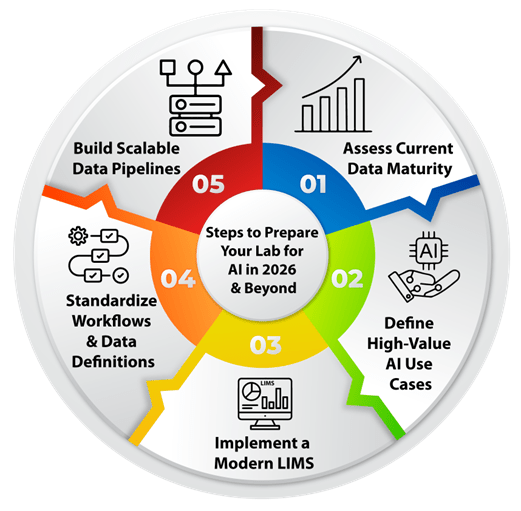
Figure 1: Steps to make your lab AI-ready for a truly digital, future-proof lab (Figure courtesy CloudLIMS)
Preparing for AI is a strategic process that starts well before model selection. Laboratories should focus on the following steps:
- Assess Current Data Maturity
Evaluate where data is generated, how it is captured, and how it is stored. Identify gaps in structure, consistency, and accessibility.
- Define High-Value AI Use Cases
Focus on practical applications such as resource optimization, quality trend analysis, compliance monitoring, or workflow optimization.
- Implement a Modern LIMS
Ensure your LIMS supports structured data capture, instrument integration, metadata management, and secure data access.
- Standardize Workflows and Data Definitions
AI models require structured, consistent inputs. Standardized workflows, controlled vocabularies, and harmonized data schemas ensure data comparability and reduce variability and data bias across processes.
- Build Scalable Data Pipelines
Prepare for future AI needs by enabling secure, scalable data flows from the LIMS to analytics platforms.
Smart LIMS Software As The Data Foundation Behind Successful Lab AI
AI adoption in a laboratory is not a one-off implementation—it is a long-term capability that matures over time. As algorithms evolve, new analytical techniques emerge, and regulatory expectations increase, the quality, consistency, and accessibility of laboratory data become even more critical. This is where the partnership between AI and a LIMS system truly comes into focus.
A LIMS may not be an AI engine itself, but it is the system that makes AI possible at scale. By structuring, standardizing, and safeguarding laboratory data, a modern LIMS ensures that AI initiatives are built on a reliable and future-proof data foundation.
A cloud-based LIMS software further strengthens this foundation by providing the scalability, connectivity, and flexibility required for modern, data-intensive laboratories. Cloud infrastructure allows labs to seamlessly scale data storage and processing as AI models evolve. It also simplifies integration with cloud-based AI platforms, accelerating model development and deployment without the constraints of on-premise infrastructure.
Let’s take a closer look at how LIMS software provides a strong data foundation to power AI-driven transformation.
First, a LIMS enforces data standardization across the laboratory. Through controlled vocabularies, predefined data fields, validation rules, and consistent workflows, it reduces variability in how results are recorded across users, instruments, and locations. This consistency is essential for machine learning models, which depend on clean, comparable datasets to generate accurate and reproducible insights.
Second, a LIMS enables data integration, a prerequisite for meaningful AI applications. AI performs best when it can learn from connected, context-rich data rather than isolated data silos. By integrating with laboratory instruments, analytical software, and external databases, a LIMS consolidates heterogeneous data streams into a unified environment—creating the comprehensive datasets AI models need to identify patterns, correlations, and anomalies.
Automation is another critical contribution. Manual data entry not only slows laboratory operations but also introduces human error that can undermine AI outputs. LIMS software automates routine processes such as sample tracking, result capture, calculations, and reporting. This automation improves speed and accuracy while ensuring data remains consistent as volumes grow—an essential requirement as AI initiatives scale.
Equally important is traceability and compliance. In regulated environments such as clinical diagnostics, environmental, or cannabis testing, AI-driven decisions must be fully auditable. LIMS software automatically maintains time-stamped audit trails, version histories, and user access controls, supporting standards like ISO 17025, GLP, and CLIA. This level of transparency preserves confidence in AI outputs and ensures historical data remains usable and defensible for future models.
Finally, LIMS software ensures data accessibility and retrieval over the long term. AI systems rely on both historical and real-time data to train, validate, and refine models. With structured search, reporting, and export capabilities, a LIMS allows laboratories to quickly locate and prepare the right datasets—accelerating new AI initiatives without starting from scratch each time.
Rather than treating LIMS and AI as separate technology projects, leading laboratories recognize them as complementary pillars of a single digital transformation strategy. As AI becomes more deeply embedded in research, diagnostics, quality control, and analytical testing, investing in the right LIMS provides the foundation for its long-term success.
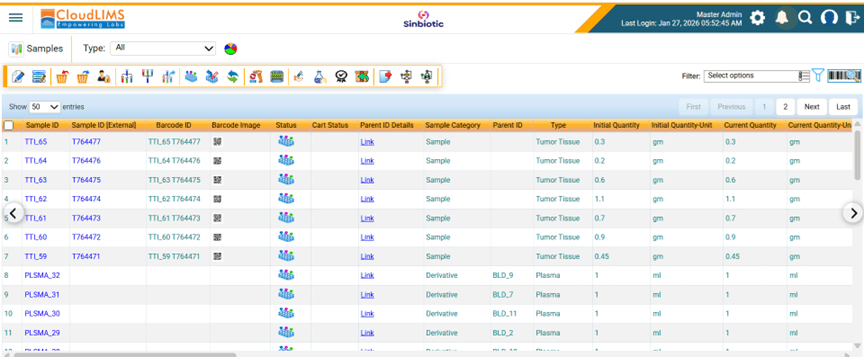
Figure 2: Implement smart LIMS software to manage sample data in a structured manner for AI-readiness (Figure courtesy CloudLIMS)
Conclusion
As laboratories move through 2026 and beyond, the question is no longer if AI will transform lab operations, but how well prepared labs will be to adopt it.
AI success begins with data readiness—and data readiness begins with smart LIMS software . By centralizing, standardizing, and governing laboratory data, a LIMS provides the foundation upon which AI can deliver real, sustainable value.
Labs that invest now in strengthening their data infrastructure will be best positioned to harness AI’s full potential—driving efficiency, quality, and innovation well into the future.
About CloudLIMS
CloudLIMS.com offers a secure, cloud-based SaaS LIMS with zero upfront cost for a wide range of industries. It helps biorepositories, clinical research and diagnostic laboratories, and analytical testing laboratories—such as those in environmental testing, materials and mining, food and beverage, and cannabis testing—manage data, automate workflows, and meet regulatory compliance and standards such as US FDA, EMEA, CAP, EU GDPR, ICH-GCP, HIPAA, ISO/IEC 17025, ISO 20387, NELAC, 21 CFR Part 11, and local regulations. CloudLIMS also provides a range of complimentary services, including technical support, product training, instrument integration, reporting templates, product upgrades, legacy data migration, and automatic data backups. Its mission is to digitally transform and empower laboratories worldwide to improve the quality of life. CloudLIMS.com is a SOC 2 compliant and ISO 9001:2015 certified laboratory informatics company.
About the Author
Shonali Paul, COO, CloudLIMS

Shonali Paul has a rich experience of working in diverse industries including IT, heavy engineering, and retail. In a career spanning over 24 years, she has built a long and impressive track record of success in high technology software sales, marketing, and professional services, developing operational strategies, and directing new business initiatives from conception through execution.
She has helped build the offshore development center in India and is the key driver of the development, operations, and product teams. She has been the key person responsible for two corporate acquisitions. She served as the Member Relations Committee chair at the International Society for Biological and Environmental Repositories (ISBER) for two terms.
She has been extensively published in international publications. She is an invited speaker at conferences across the globe and has delivered insightful presentations at numerous international events.
Shonali Paul holds a Bachelor of Engineering degree from SGSITS, Indore, and an MBA from Xavier Institute of Management, Bhubaneswar, India.
About Astrix
As the market leader in life science consulting, Astrix specializes in helping companies plan, select, implement, and validate their most critical systems. Our technology and process-agnostic approach ensures we deliver tailored solutions and expert talent to address even the most complex challenges. From strategic planning to technology implementation and staffing solutions, Astrix is your trusted partner in driving business success. Contact us at www.astrixinc.com to discover how we can accelerate your growth and streamline operations with our strategic life science solutions.
Case Study: LabWare Centralized Data Review for a Global Biopharmaceutical Company
Overview A global biopharmaceutical company specializing in discovery, development,... LEARN MOREWhite Paper: Managing Data Integrity in FDA-Regulated labs.
New White Paper LEARN MORELET´S GET STARTED
Contact us today and let’s begin working on a solution for your most complex strategy, technology and strategic talent services.
CONTACT US