
From Legacy Systems to the Digital Lab of the Future


Transforming Lab Operations for Smarter, Scalable Science to achieve a Digital Lab of the Future
Discovery today depends not only on research but on the speed at which insight drives impact. To keep pace, labs must evolve into agile, digitally enabled environments that attract top talent and drive continuous innovation. This transformation begins with reimagining how data, people, and technology connect to accelerate scientific discovery and operational efficiency.
Modernization begins with a modular, interoperable foundation that enables seamless data exchange across applications, instruments, and analytical platforms. By integrating composable architecture, interconnected systems support scalable workflows that accelerate innovation and easily adapt to changing scientific needs.
From AI-powered automation to sustainability and compliance by design, the Lab of the Future (LotF) must redefine how science meets the complex demands of next-gen research and commercialization. Future-readiness goes beyond technological advancement. It requires organizational agility to adapt, scale, and innovate rapidly across the research lifecycle.
Key Trends Shaping Digital Lab Innovation in 2026
Artificial Intelligence (AI) and Machine Learning (ML) have rapidly reshaped industries worldwide, and scientific research is no exception. By 2026, AI will be a core driver of digital lab innovation, accelerating discovery by automating routine tasks, uncovering new insights from complex data, and redefining both the pace and scale of modern science.
AI can only deliver meaningful impact in the lab when it operates within a well-integrated ecosystem of enabling technologies. Over the past decade, labs have adopted AI for tasks such as error detection, workflow optimization, and predictive analytics. These tools were often deployed through isolated, stand-alone applications. By 2025, the paradigm has shifted. AI has become a foundational driver of data-led scientific discovery, fully integrated across laboratory systems.
Attracting and retaining top talent is critical to building the LotF, especially as workforce shortages intensify and the demand for interdisciplinary expertise continues to grow. To realize the full potential of AI/ML and composable lab technologies, organizations must engage emerging talent pools and adapt to shifting workforce demographics. Teams that combine computational, engineering, and scientific expertise are uniquely positioned to drive data-informed research and advance scientific discovery.
The following trends are driving digital lab innovation in 2026:
Digital Transformation in R&D
Labs are increasingly moving away from rigid, siloed systems and toward modular, composable designs that support rapid configuration and deployment. Composable IT architecture allows functional modules to be assembled, reconfigured, and scaled as needed. This enables labs to adapt quickly to shifting research needs and integrate with modern technologies with minimal disruption.
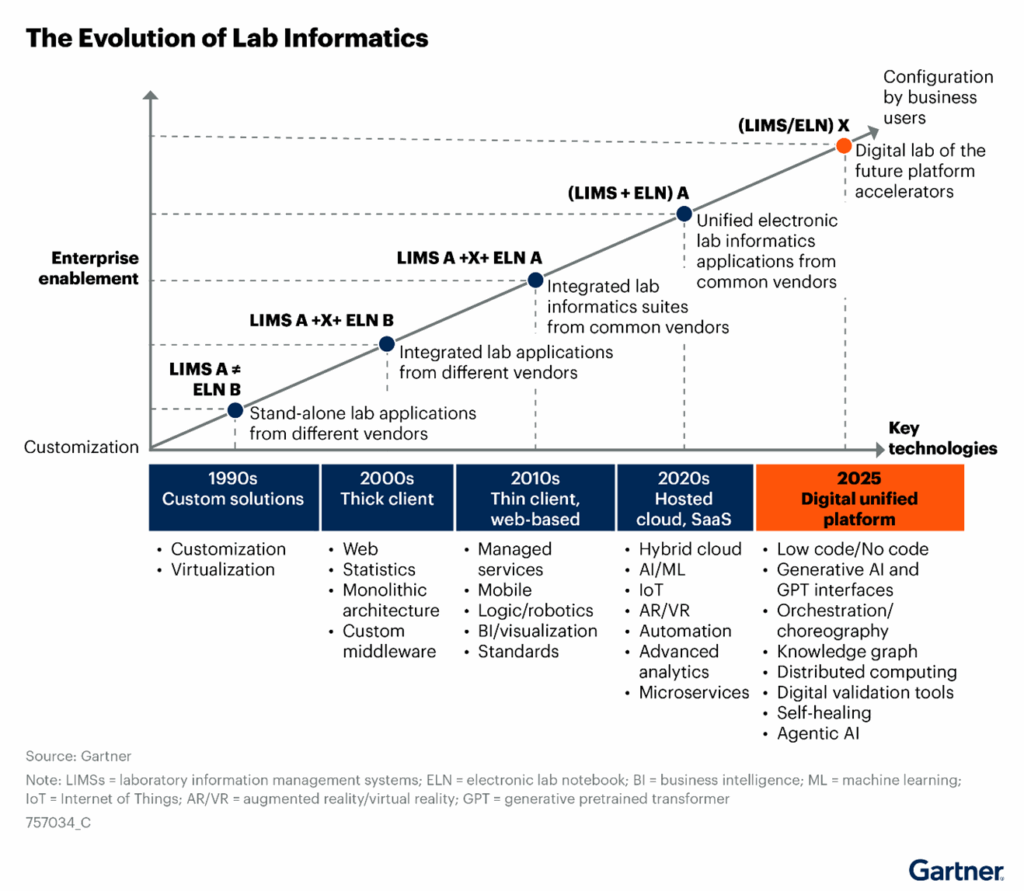
Figure 1: The Evolution of Lab Informatics (Gartner, 2025)1
After decades of heavily customized LIMS, the market is shifting toward composable platforms with low code/no code modular solutions. This transition, driven by advances in APIs and platforming, is key to enabling AI-powered digital lab strategies.
AI/ML Powering the Future of Data-Centric Research
AI and machine learning are redefining the research paradigm by automating data analysis and enabling a shift from hypothesis-driven experimentation to integrated, data-centric discovery. This evolution enables researchers to identify subtle patterns and extract actionable insights that inform decision-making in real time.
As data volumes expand exponentially and algorithms become increasingly sophisticated, researchers can now predict outcomes, optimize experimental designs, and automate complex workflows with unprecedented efficiency. This enables a highly iterative, insight-driven approach to discovery. The result is a research environment that is intelligent, scalable, and adaptable to evolving scientific challenges. AI/ML are no longer just tools; they are catalysts for a fundamental transformation in scientific methodology, accelerating innovation with a speed and precision previously unattainable.
Compliance as a Competitive Advantage
Regulatory compliance is emerging as a strategic priority for R&D in 2026, as global standards evolve toward greater safety, transparency, and integration with AI. These shifts are redefining how research is planned, executed, and validated. While global alignment reduces redundancy for multinational organizations, it also demands more rigorous, risk-based quality management systems.
The integration of AI/ML into R&D introduces new challenges around data integrity, traceability, and ethical use. Embedding compliance throughout the research lifecycle ensures audit readiness, accelerates approvals, and safeguards market access. In an increasingly distributed R&D environment, consistent compliance across geographies and partners is essential. Integrating compliance into digital and scientific processes transforms it from a requirement to a driver of innovation and competitive advantage.
Talent Strategy for the Modern Lab
Innovation in today’s lab depends as much on people as on technology. As automation, AI, and advanced data systems transform R&D, success relies on a workforce skilled in digital tools and cross-functional collaboration. Even the most advanced platforms require experts to design, operate, and interpret them, making talent strategy a true differentiator.
Modern labs must also align with evolving workforce expectations for purpose-driven work, flexibility, and access to advanced technology. Investing in continuous learning, professional growth, and inclusion attracts skilled professionals and fosters adaptive teams that drive innovation through novel approaches and collaborative thinking.
From Legacy to Lab of the Future
The Lab of the Future is more than a technological upgrade. It represents a fundamental transformation in how science is conducted, enabling research to be faster, smarter, and more interconnected than ever before. Traditional labs often rely on manual processes and fragmented data systems that limit visibility and slow innovation. Tomorrow’s labs are built on adaptive infrastructure and interoperable data platforms that support end-to-end workflow automation and real-time data exchange.
As the pace of discovery accelerates, labs that can evolve, collaborate, and scale will lead the next generation of scientific progress. Outdated systems are giving way to agile, data-driven environments that enable faster discovery, more innovative collaboration, and real-time insights. Modernization is no longer optional. To remain at the forefront of discovery, today’s labs must be flexible, intelligent, and structured for continuous innovation. This transformation is driven by AI/ML, integrated data ecosystems, and adherence to global standards that ensure scientific integrity while enabling operational agility.
The future of research depends not only on breakthrough ideas but also on laboratories that can evolve, interconnect, and adapt continuously. Equally important is having skilled multidisciplinary teams who work collaboratively with advanced systems to create an environment where discovery accelerates and innovation becomes an integral part of every workflow.
About Astrix
As the market leader in life science consulting, Astrix specializes in helping companies plan, select, implement, and validate their most critical systems. Our technology and process-agnostic approach ensures we deliver tailored solutions and expert talent to address even the most complex challenges. From strategic planning to technology implementation and staffing solutions, Astrix is your trusted partner in driving business success. Contact us at www.astrixinc.com to discover how we can accelerate your growth and streamline operations with our strategic life science solutions.
References:
1Gartner, Inc. (2025). Market Guide for Laboratory Information Management Systems, April 16, 2025.
Case Study: LabWare Centralized Data Review for a Global Biopharmaceutical Company
Overview A global biopharmaceutical company specializing in discovery, development,... LEARN MOREWhite Paper: Managing Data Integrity in FDA-Regulated labs.
New White Paper LEARN MORELET´S GET STARTED
Contact us today and let’s begin working on a solution for your most complex strategy, technology and strategic talent services.
CONTACT US